The gradual development of our game titled “Beyond The Gate” was a very fruitful experience. I’m very thankful to my two other group members, Alan and Liann. Though we have a rather small group in comparison to sothers, we managed to produce something that we can be proud of. Each member has played a significant role in the development of our game, and this blog post will discuss the collective processes throughout the design experience so far from my perspective.
Idea Stage
Me and Alan are both fans of Dungeon and Dragons (DnD), so we wanted to make a dice-based tabletop roleplaying experience for our project as we take on DnD as our inspiration. This concept would be the foundation where we would begin to build our game as we would discuss about various ideas, such as how we would make it into a Sci-Fi setting and also implementing cards that influence gameplay.
We wanted a game where the player can explore various events that appear based on chance. We also ended up making the choices of player characters randomized, as well as their goals. This randomizing element adds to the replayability of the game, where there can be no exact same game with each iteration. We chose the route to produce our idea as a digital program which allows for the behind-the-scenes calculation for our game. These calculations would cover various things immediately, such as determining the next events, the many choices possible, and the combat system.
Combat Idea
Combat is an integral part of the RPG experience, however we were struggling to find the right formula for implementing it into our game. What could be easy to learn, and what could also be easily programmable? I was mainly responsible in considering the formula of our game, and I recalled my favorite online party game which involved the use of dice as well as its simple mechanics called 100% Orange Juice.
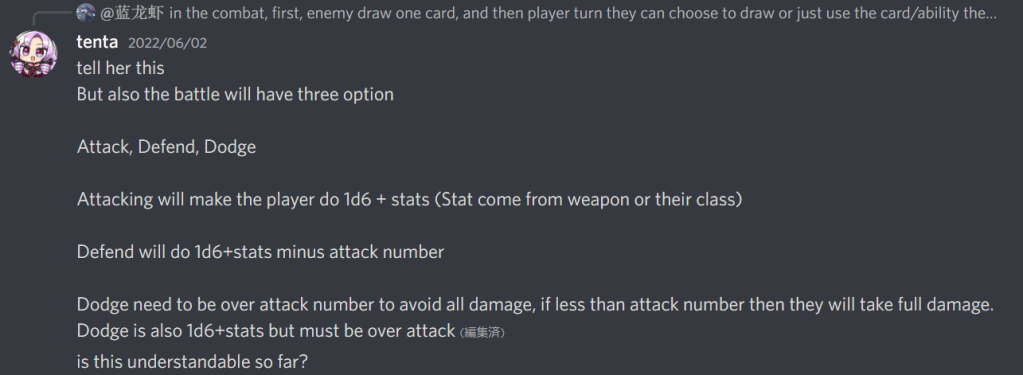
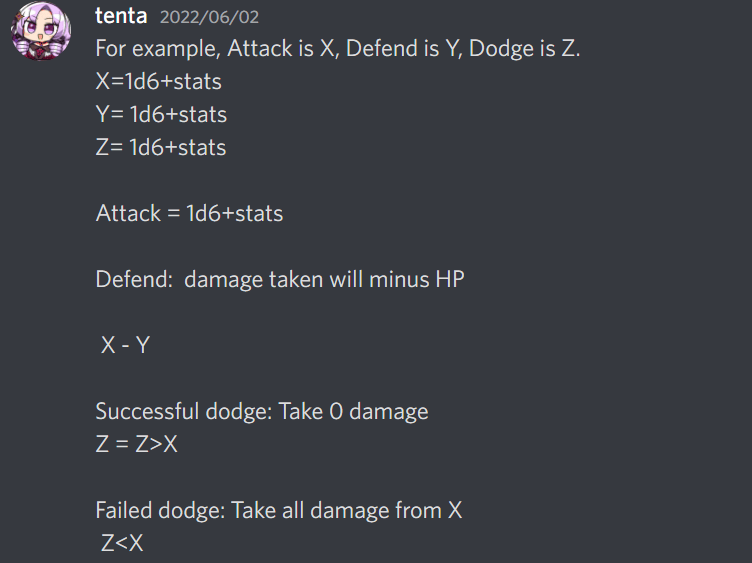
I actually went out of my way to buy the two of my groupmates the game “100% Orange Juice” on Steam, just for the purposes of our research. However we enjoyed a couple of games and easily learned the mechanics which inspired us to incorporate the ideas into our game.

It also helped us fully visualize how an online board game can utilize both the use of dice and cards. We ended up making some of the cards have effects that can also be used in battle. For example, a Gun card means that your character has found a gun, and may use it in combat to make their offensive attack stronger.
Story writing, Editing & Translations
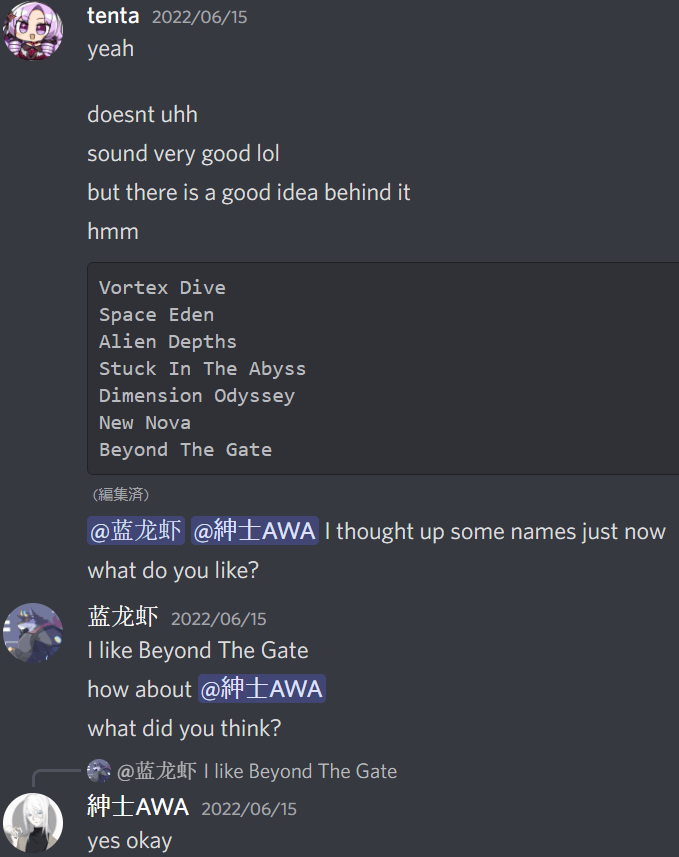
In the ideation process, there were many uncertain factors because we were suggesting a lot of various ideas. For instance, we did not know how to really incorporate sci-fi elements in a scientific manner. We also did not really have a name for our project until the end, as we simply were just referring to it as the ‘BCM300 Game Project’ for most of the time. We ended up going with the idea that both magic and technology existed in this world, and from there, I could write much of the prologue story as the lore of our game. I also thought up of several names, and our groupmates decided one among them.
Similar to how major tabletop roleplaying games have a Player’s Handbook, we have also directed our efforts into making one that is both in English and Chinese. We realized that these could even effectively be great marketing, as we could make use of the two most commonly used languages in the world.
In my playtesting phase of the game, it was mostly a debugging process due to the programmed nature of the game. I played around and performed random tasks to trigger random events, and reported any bugs found in the program back to Alan. We also considered the balancing of the game which involves making the parameters of both players and enemies. These involved changing the stats, and also testing out the in-game combat system with each character and each monster. We decided to give players a lot of Hit Points (HP), which enables enough survivability to slay enough enemies to fulfill their goals. This also prevented players from killing each other too quickly early in the game, as some hidden roles may be assigned such nefarious tasks. Of course, we also managed to think up more elements for the roles of these characters and from the popular game Among Us, it has also inspired some of our game design and introduced the new element of uncertainty and doubt when it comes to trusting other players. Not every game will have a player-killing role either as role distribution is randomized, so that makes it more unpredictable.
I also would remake the text presented in the game for grammatical consistency, and edit many things as neither of my groupmates are fluent in English. But I think that proofreading has been a valuable experience and we can cover each other’s weaknesses while making our own ideas shine within the final product.
Presentation
I believe that each member has contributed to an equal degree when it came to the presentation. Liann came up with the designs, I wrote the story and edited several of the slides, while Alan would find the relevant game screenshots to discuss their part in the presentation. We all also had our parts to say during the live presentation. Even though it is not a full game that we had presented, the message that we wanted to convey was that this was a game prototype full of potential and many possibilities. We also had proven the functionality of our movement system in-game, and the working combat system. There were no bugs present in the presentation, which means our arduous debugging has proven to be fruitful.
Conclusion
Though my group was small, everyone was familiar with games, and I felt that this was one of the factors that made the development process really engaging. I personally also wish to make my own game one day, and having taken part in the various planning stages and behind-the-scenes work with development has been a very educational experience.

