Ever since cryptocurrency has been popularized in the mainstream, you just hear about it all the time now. From conversations of your social circles, in your school books and now even in advertisements online! With its widespread talk spanning across all sorts of communities, it does make one wonder just what exactly is all the hype about.
Or perhaps you’re in the know about cryptocurrency by now, and it’s old news to you. But are you aware that the central banks are developing their own kind of cryptocurrency, known as Central Bank Digital Currency(CBDCs)?
In this blog, no matter how much or little you know, I’ll be briefly touching on what CBDCs and cryptocurrency are about – and why this matters to you!
What is cryptocurrency?
The story begins with Bitcoin as the first cryptocurrency. In 2008, An anonymous person known as “Satoshi Nakamoto” published whitepapers which acts as a blueprint to an “peer to peer electronic cash” system known as Bitcoin.

These whitepapers can be found available here: bitcoin.org/bitcoin.pdf
The purpose of this was primarily the decentralization of sending funds to one another, without needing to go through centralized financial institutions such as banks. This also means there would be no third-party middleman taking the cut from transactions made between two people. An good example of this is how a payment gateway like PayPal would take a service cut whenever I receive money from people overseas. Cryptocurrency would not have such a service cut, and it would not rely on the bank or the government on checking transactions which makes it anonymous. Furthermore, in the event where the central authority would shutdown, the money would lose its value. Decentralized currency are able to operate as long as the network exists.
Cryptocurrencies operate on the Blockchain, which is a system that acts as a digital ledger in keeping track of the transactions. This public blockchain is maintained by everyone in the network, and is constantly growing with more users. The Blockchain is also an extremely secure, which is why many companies are making projects of various ways to apply Blockchain technology.
What are CBDCs?

Central Bank Digital Currencies (CBDC) are basically a centralized version of cryptocurrency that is issued by the central bank or the government. Their value is fixed to be the value of the country’s currency. CBDCs would work anywhere just like your physical cash, except through your phone or other electronic wallet devices like a smartwatch. Given the anonymous nature of cryptocurrency, it is understandable that there are many central bank and government authorities who dislike it, as it could encourage money laundering and tax evasion.
It is important to note that these aren’t just like the digital money from your credit card or your payment app. Though they are indeed digital, they are just credits and debits from between banks and payment providers like VISA & Mastercard. CBDC are directly from the central bank. Many countries nowadays are researching CBDCs as they are planning to transition to digital currencies. Much of these CBDCs would share the benefits of cryptocurrency, such as reducing cross-border transaction fees and also bolster financial security. It could also help governments send stimulus checks or COVID relief funds much easier if it was a society that has adopted CBDCs.
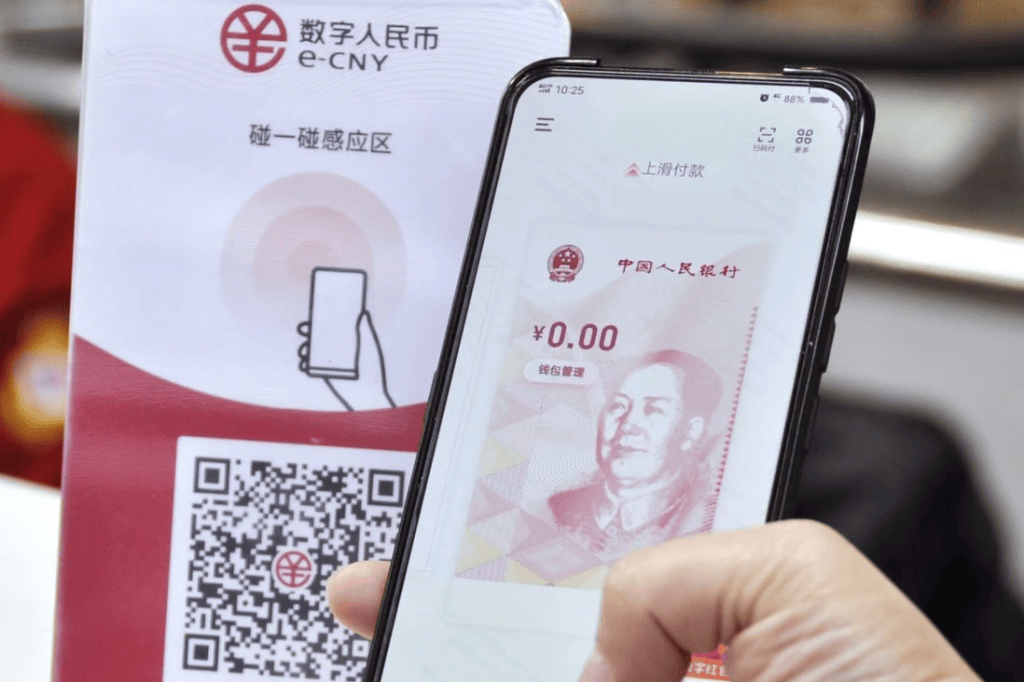
You may have heard of China’s revolutionary financial project in rolling out its digital yuan as part of its economy. It serves as an excellent example showcasing how CBDCs work. It requires only a simple download as an app, and would not require Internet as it uses NFC for offline payment. As your CBDC wallet is connected to the government, they are able to provide immediate financial assistance and provide appropriate tax and interest rates. It is also a countermeasure against counterfeit money and money laundering. However, it’s important to remember that depending on the country, the government may have the power to track your spending behaviors and adjust your credit score accordingly, or even freeze your wallet. Sounds like a scary technology under the hands of totalitarian regime, doesn’t it?
In my next blog, I’ll be sharing my visions on what the future has in store with these two types of currencies. You don’t want to miss it!
References




Hey Ahmir! Thank you for the introduction to cryptocurrency and the CBDC. I am those in a friend circle that is clueless about bitcoin or any digital currency and its functions despite the countless times of hearing the term and people explaining it to me, but you explained it in a way that was not complicated and too technical.
In the blog post, you have briefly talked about blockchain, risks of money laundering, and tax evasion, do you think there are any social factors in the future in the play of digital currency? Because when we talk about future planning, we don’t only look at the trend at hand or the convenience but there is a social responsibility.
Here is a reading that may help look at how the future development of the digital economy can impacts society. (The digital economy and crypto-currencies: challenge or threat to traditional society https://uow.primo.exlibrisgroup.com/permalink/61UOW_INST/otb3u8/cdi_doaj_primary_oai_doaj_org_article_19fdd3a2e8394784a6f49575e02ba366)
LikeLike
Pingback: Peer comments: BETA – Good Tidings from Bean
Pingback: Beta Peer Commentaries – Alan Kwan's Blog