Academic Research
In the previous blog post, I identified a few problems that are possible with my media niche. Therefore, this section will explore relevant background research in discovering possible solutions and interesting data on the current state of my pixel art niche.
Looking at the general overview of pixel art as a whole, one can think of it as a rising trend nowadays. Because there are more indie game developers entering the game industry, many are adopting the retro style due to its quirky and distinguishable nature.
Furthermore, there are recent technological advancements that present the retro art style and broadcasts the niche to wider audiences. An example is the rise of Non-Fungible Tokens (NFTs) where the pixel art style is now experiencing a surge in its notability. A major influence to this sudden rise is CryptoPunks, an NFT project that generated thousands of NFT avatars in pixel art form.
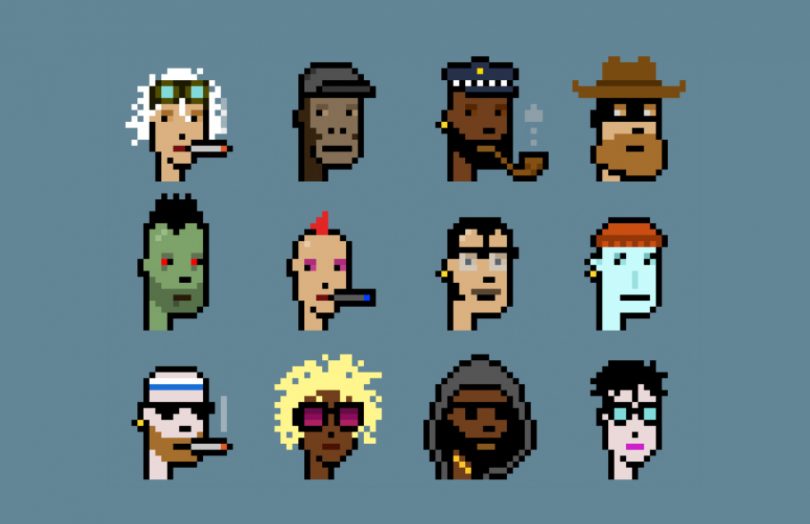
In recent years, they have become extremely valuable collectables that can potentially sell for millions of USD. Since NFT’s explosion in popularity in February, CryptoPunks has become a highly sought-after NFT collection. For instance, Two alien punks avatar sold in March for more than $7.5 million each. In just a few months since then, seven more avatars have sold for more than $1 million. (Kastrenakes, 2021)
It is crazy to imagine how these little avatars could fetch such high prices, and it’s encouraged many people nowadays to delve into pixel art. Myself included. We can see the demand for pixel art exists because there are people willing to spend millions on NFTs in their style. The rise of NFTs has proven and justified pixel art as a style that is highly valued, which challenges my previous thought in Blog 3 where I believed pixel art was considered a ‘low art’.
Ethical Issues
When considering any possible ethical issues that may arise from pixel art, it is a simply a style of art, so it is a bit too broad to define any. Therefore, we will shift our perspective to how a pixel artist handles intellectual property. These ethical issues apply for most forms of art, but it is worth a discussion.
In my Blog Post 3, I’ve presented a few pixel art that are actually ‘fan art’ of existing franchises. In my own experience as a pixel artist, there are also times where I make pixel art for characters that I like.
This is an example of my pixel ‘fan art’ of King Shark from The Suicide Squad by DC Universe.
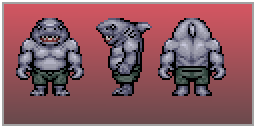
It is originally produced as a personal practice of sketching my favorite character from the show in different angles.
In order to comply with their terms and condition for the creation of this piece, I followed the guidelines set by the company that owns the rights here: https://support.dcuniverse.com/hc/en-us/articles/360035343533-FanArt-Submission-Guidelines
Essentially, it is a non-profit piece of fan art that does not contain any political / religious messages and the design remains faithful to the original. It does not contain any defamatory or damaging elements in the design that may harm the character’s image. If the original owner of the art were to request removal, I would immediately take down the image.
There are legal consequences to not abiding to the guidelines, and if I intended to profit from fan art then I realize I must first consult the copyright owner with a formal letter and their permission for the greenlight. Interestingly, in recent news, DC has even banned artists from selling their work as NFTs.(King, 2021)
Fan art is a strange case in legality, as most presented online are actually infringements without exception. Most people do not contact the copyright owners especially when they are famous characters, however many companies tolerate the creation of fan derivative works and some even encourage it as a form of promotion.(Bailey, 2021)
The safest way to proceed as a pixel artist is to simply make my own characters for my own work, so there is no need to deal with the complicated legal world. Otherwise, I will need to look for the original IP owners especially if I wanted to use their copyrighted characters for commercial purposes.
References
Larvalabs.com. 2021. CryptoPunks. [online] Available at: <https://www.larvalabs.com/cryptopunks> [Accessed 16 October 2021].
Kastrenakes, J., 2021. CryptoPunks NFTs sell at Christie’s for $16.9 million. [online] The Verge. Available at: <https://www.theverge.com/2021/5/11/22430254/cryptopunks-christies-sale-larva-labs> [Accessed 16 October 2021].
DC Extended Universe Wiki. 2021. King Shark. [online] Available at: <https://dcextendeduniverse.fandom.com/wiki/King_Shark> [Accessed 16 October 2021].
King, S., 2021. DC Just Banned Its Artists From Selling Certain Art. [online] ScreenRant. Available at: <https://screenrant.com/dc-comics-banned-artist-nft-sales-art/> [Accessed 16 October 2021].
Bailey, J., 2021. The Messy World of Fan Art and Copyright – Plagiarism Today. [online] Plagiarism Today. Available at: <https://www.plagiarismtoday.com/2010/05/13/the-messy-world-of-fan-art-and-copyright/> [Accessed 16 October 2021].

